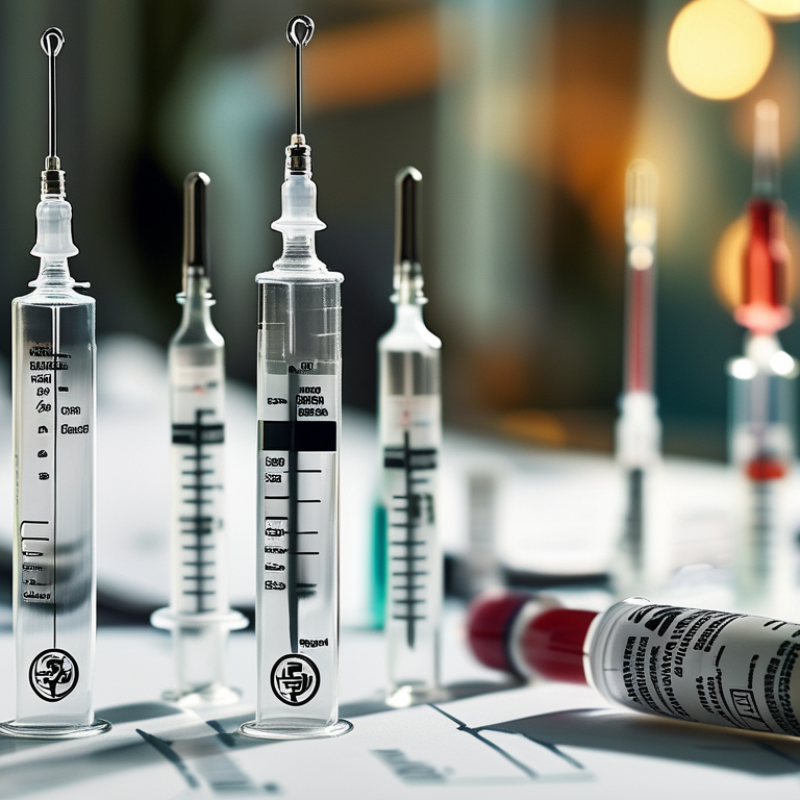
Choosing the right Disposable Needle in 2026 requires more than comparing prices or reading a product label. Needle design affects comfort, control, precision, and infection prevention. A reliable choice begins with the intended professional use, the device being used, and the user’s training. Small details matter. A secure hub, clear markings, and an intact sterile seal can prevent avoidable problems.
Current buyers should examine gauge, length, material, bevel design, packaging, expiration date, and manufacturer documentation. Compatibility must be confirmed before use. A needle that fits one syringe or device may not fit another safely. Look for traceable batch information and quality certifications recognized in your region. Products should come from authorized suppliers, not uncertain marketplaces. Local healthcare rules and workplace procedures also deserve careful attention.
Practical experience often reveals what specifications hide. A smooth connection can improve handling, while poor packaging may damage confidence before use. Still, no checklist is perfect. A thinner needle is not automatically better, and the lowest price may create hidden risks. Professionals should follow approved protocols and consult qualified healthcare or procurement specialists when uncertain. This guide will compare key features, common selection mistakes, storage considerations, and responsible purchasing practices. It will not replace clinical judgment. That limitation matters. In 2026, the best Disposable Needle is the one that matches its documented purpose, supports safe handling, and comes from a dependable supply chain.
Disposable needles are sterile, single-use devices designed to deliver or withdraw fluids safely. WHO has estimated that about 16 billion injections occur worldwide each year (WHO, 2010). They support vaccination, insulin delivery, blood sampling, dental anesthesia, and minor clinical procedures. Needles differ by gauge, length, bevel, hub, and connection type. A smaller gauge number means a wider bore. This matters for thicker fluids. It is easy to misread.
In 2026, selection should begin with the procedure, patient, medication viscosity, route, and device compatibility. A 25-gauge needle may suit some injections, but not every patient or fluid. Check package integrity, sterility information, expiration date, lot number, and applicable regulatory documentation. CDC injection-safety guidance requires one needle, one syringe, and one time. WHO’s 2022 infection-prevention report found healthcare-associated infections affect about 7 in 100 acute-care patients in high-income countries. The figure reaches 15 in 100 in low- and middle-income countries. This statistic is not needle-specific, but it exposes the cost of weak infection control.
In practice, I would assess the entire workflow. The needle should open cleanly, connect securely, and support controlled handling. Staff feedback also matters. A technically correct size can still create waste or discomfort. Procurement teams sometimes focus on unit price and overlook training, storage, and disposal capacity. That is a weakness worth challenging.
Needle selection begins with the procedure, not the package. The World Health Organization estimates that about 16 billion injections occur worldwide each year. That volume makes small design choices important. Match the needle route, tissue depth, fluid viscosity, and delivery device. Intramuscular procedures commonly use 22–25 gauge needles, according to CDC vaccination guidance. Larger numbers mean thinner needles.
Length matters as much as gauge. Adult intramuscular injections often require 25–38 mm lengths, while subcutaneous procedures commonly use shorter needles. Patient size, injection site, and tissue depth can change that choice. A 25 mm needle may suit one adult, but not every adult. This is where simple charts become imperfect. I still recheck the procedure protocol.
For material, medical-grade stainless steel remains the standard for the cannula because it offers strength, consistency, and corrosion resistance. A polypropylene or similar medical polymer hub can improve handling and device compatibility. ISO 7864 specifies requirements for sterile, single-use hypodermic needles, including dimensions, cleanliness, and performance. Look for a sharp, uniform bevel and secure hub connection. For viscous medication, a wider bore may reduce resistance, but it can increase tissue impact. Smaller gauges may feel gentler, yet they can slow delivery. Choose sterile, single-use products with documented quality testing, intact packaging, and clear lot traceability.
How to Choose Disposable Needles in 2026?
Choosing disposable needles should begin with sterility, not price. Inspect every package for tears, moisture, opened seals, or unclear printing. A sterile barrier must remain intact until use. Check the expiration date, lot number, and sterilization method. Reliable suppliers should provide validation records and certificates that match the product. Standards such as ISO 11135 or ISO 11137 may support sterilization claims. Confirm the applicable requirements in your country.
Safety features deserve close attention. Look for needle designs that reduce accidental contact after use. A secure shield should lock visibly and resist easy reopening. Test the connection between the hub and compatible equipment before routine use. The needle should feel stable, without bending, wobbling, or unusual resistance. Select the gauge and length according to the intended procedure and professional guidance. Small differences matter.
Product quality also appears in simple details. Examine the bevel, plastic molding, cap fit, and label clarity. Ask for batch traceability, quality-control results, and complaint-handling procedures. Packaging may look professional and still hide weaknesses. I have learned not to trust appearance alone. No checklist is perfect. Staff feedback can reveal problems that laboratory documents miss. Record rejected packages and review patterns regularly. This practical evidence helps separate consistent quality from a merely convincing sample.
How to Evaluate Sterility, Safety Features, and Product Quality
| Evaluation Area | What to Check | Relevant Standard or Evidence | Practical Acceptance Criteria | Common Red Flags | Priority |
|---|---|---|---|---|---|
| Sterility claim | Confirm that the needle is labeled sterile and intended for single use. | Product label, instructions for use, technical file, and applicable regulatory authorization. | The sterile status, single-use symbol, lot number, and expiration date should be clearly identifiable on the package. | Unclear sterility wording, missing expiration date, or packaging that does not identify the product lot. | High |
| Sterilization process | Identify the sterilization method and verify that the process has been validated for the finished packaged product. | ISO 11135 for ethylene oxide, ISO 11137 for radiation, or ISO 17665 for moist heat, when applicable. | Validation should cover the actual product, packaging configuration, load pattern, and claimed shelf life. For terminally sterilized products, a sterility assurance level of 10−6 is commonly used as the target. | Only a statement such as “sterile processed” without a method, validation summary, or release controls. | High |
| Sterile barrier packaging | Inspect the individual blister, pouch, or other sterile barrier for seal integrity and protection from damage. | ISO 11607-1 and ISO 11607-2; packaging integrity and seal-process validation records. | Packaging should be intact, dry, sealed, easy to open aseptically, and protected from puncture or abrasion during transport. | Tears, pinholes, loose seals, delamination, moisture, or packaging that can be opened without clear evidence of seal integrity. | High |
| Shelf life and storage | Check the expiration date, storage conditions, and evidence supporting the claimed shelf life. | Accelerated and real-time aging data; package integrity testing; storage instructions on the label. | The product should remain within specification through the labeled shelf life when stored under the stated temperature, humidity, and light conditions. | Expired or illegible dates, missing storage instructions, or evidence that the package becomes brittle or weak during aging. | High |
| Needle dimensions | Verify gauge, nominal outside diameter, effective length, and compatibility with the intended procedure. | ISO 7864 for sterile single-use hypodermic needles; ISO 9626 for stainless-steel needle tubing, where applicable. | Measured dimensions should comply with the declared specification and be suitable for the intended injection, aspiration, or administration task. | Gauge or length differs from the label, inconsistent dimensions between lots, or a needle that does not fit the intended device. | High |
| Tip and bevel quality | Examine the bevel geometry, sharpness, tip symmetry, burrs, and surface defects. | Dimensional and functional testing under the applicable needle specification; documented visual inspection criteria. | The tip should be clean, sharp, centered, and free from visible burrs, cracks, metal fragments, blocked openings, or rough edges. | Blunt or distorted tip, uneven bevel, visible burrs, blocked lumen, excessive insertion force, or unusual tissue drag. | High |
| Cannula material and surface | Confirm material grade, corrosion resistance, cleanliness, and surface finish. | Material specification; corrosion and cleanliness testing; ISO 7864 or applicable national requirements. | The cannula should be free from visible corrosion, particles, lubricant pools, discoloration, and manufacturing residue. | Rust, flakes, discoloration, visible particles, excessive lubricant, or an undisclosed material change between lots. | High |
| Lubrication | Assess the type, amount, uniformity, and biocompatibility of any lubricant used to reduce friction. | Material safety data, process controls, residue limits, and relevant ISO 10993 biological evaluation. | Lubricant should be medically suitable, consistently applied, and not visibly pooled or transferred in excessive amounts. | Unknown lubricant, visible droplets, inconsistent coating, unexpected irritation, or no control of lubricant residue. | Medium |
| Hub and connection security | Check hub attachment, leakage resistance, connector fit, and dimensional compatibility. | ISO 7864 and applicable connector requirements; leak, tensile, and connection-force test records. | The hub should be firmly attached, free from cracks, compatible with the intended syringe or device, and resistant to leakage during use. | Loose hub, cracking, wobbling, leakage, difficult connection, or unexplained incompatibility with standard fittings. | High |
| Safety mechanism | Determine whether a safety shield, sliding cover, hinged guard, or other sharps-injury prevention feature is required. | Applicable national sharps-safety regulations; usability and performance testing for the complete needle system. | The mechanism should activate reliably, remain locked or stable after activation, and allow the intended procedure without obstructing visibility. | Guard activates accidentally, fails to cover the sharp completely, requires unsafe hand positioning, or is incompatible with the workflow. | High |
| Passive versus active protection | Compare whether the protection activates automatically or requires a deliberate user action. | Risk-management file, human-factors validation, and documented use-error analysis. | Passive protection may reduce dependence on user action; active protection should have clear activation feedback and a low failure risk. | Safety feature is difficult to understand, cannot be activated with one hand when required, or has no evidence of usability testing. | High |
| Biocompatibility | Evaluate patient-contacting materials, residues, coatings, adhesives, and processing aids. | ISO 10993 biological evaluation based on contact type, duration, and intended clinical use. | The biological evaluation should address the finished device, including sterilization residues and lubricants, rather than only the raw material. | Biocompatibility evidence covers only a raw material, omits patient-contacting coatings, or does not reflect the intended route of use. | High |
| Particulate and endotoxin control | Review controls for visible particles, subvisible particles, bacterial endotoxins, and manufacturing cleanliness. | Validated cleanliness and endotoxin methods appropriate to the product and intended route of administration. | The product should meet the applicable pharmacopoeial or regulatory limits for its intended use; limits are route- and product-specific. | Generic “clean” claims without test methods, visible debris, or endotoxin limits that are not linked to the intended clinical application. | High |
| Manufacturing quality system | Assess process control, inspection, nonconformance handling, corrective actions, and supplier controls. | ISO 13485 certification or equivalent quality-system evidence, subject to the applicable jurisdiction. | Critical processes such as grinding, cleaning, assembly, packaging, and sterilization should be controlled and traceable. | No documented quality system, repeated unexplained defects, or inability to provide lot-specific quality records. | High |
| Lot traceability | Confirm that each package can be traced to manufacturing, sterilization, inspection, and distribution records. | Lot or batch number, production date, expiration date, and applicable device-identification requirements. | Traceability should support rapid investigation, targeted recall, complaint handling, and verification of the supplied specification. | Missing lot number, mismatched labels, unreadable barcodes, or inability to link the product to sterilization records. | High |
| Labeling and instructions | Review gauge, length, intended use, sterile status, single-use statement, warnings, storage conditions, and disposal instructions. | ISO 15223-1 symbols and applicable labeling regulations in the destination market. | Information should be legible, consistent across the individual package and outer carton, and sufficient for safe selection and disposal. | Ambiguous size notation, missing warnings, conflicting information, or symbols without adequate explanation where required. | High |
| User handling and packaging usability | Evaluate opening force, grip, visibility, presentation, and risk of accidental contact with the sterile needle. | Human-factors or usability evaluation for the intended user population and clinical environment. | Packaging should support aseptic presentation and minimize needle contact, dropped components, and confusion between sizes. | Needle springs out of the package, sterile surface is difficult to access, or similar sizes are easily confused. | Medium |
| Sampling and incoming inspection | Establish a documented inspection plan for incoming lots instead of relying only on supplier claims. | Risk-based sampling plan, certificate review, visual inspection, dimensional checks, and complaint trend review. | Sampling levels and acceptance criteria should be defined before inspection; critical defects should have zero-tolerance handling appropriate to risk. | Unspecified sampling, acceptance based only on appearance, or use of an AQL value without a defined sampling standard and defect classification. | Medium |
| Environmental and disposal considerations | Consider packaging efficiency, material disclosure, disposal instructions, and sharps-container compatibility. | Applicable waste-management, occupational-safety, and environmental requirements. | Used needles should be disposed of immediately in an approved sharps container; recycling claims should not compromise infection or sharps safety. | Instructions encourage recapping, disposal guidance is absent, or environmental claims are unsupported by material and process data. | Medium |
Selection note: The applicable requirements depend on needle type, intended route of administration, safety configuration, and destination market. Always verify the current regulatory requirements and the manufacturer’s lot-specific documentation before use.
Choosing disposable needles in 2026 requires more than matching a gauge. Confirm the procedure, needle length, bevel, and hub connection. A needle may fit the syringe yet fail with an automated device. Check the compatibility chart, not a sales photograph. Review material details when allergies or imaging environments matter. Record the lot number and expiry date during receiving.
Packaging deserves careful inspection. The outer seal should be dry, closed, and free from punctures, crushed corners, or lifted labels. Each sterile unit should show an expiry date, lot number, sterilization information, and single-use instruction. If a pouch feels damp or the indicator looks unusual, quarantine it. Do not “probably” use it. Storage temperature, humidity, and stock rotation can affect reliability.
Tips: Create a simple receiving checklist. Compare gauge, length, connection, sterility, and quantity with the purchase order. Verify current requirements with the competent authority in your market. Rules can differ by country and intended use. Keep declarations, inspection records, and complaint contacts accessible. Teams often focus on the needle and overlook the label. That mistake is easy to repeat. Review the checklist with clinical and quality staff, because compatibility assumptions are sometimes wrong.
This chart shows nominal outside diameters for commonly specified needle gauges under ISO 9626. A lower gauge number indicates a larger outside diameter. Confirm the required gauge, needle length, hub connection, and syringe or device compatibility before purchase.
For packaging and regulatory checks, verify sterile-barrier integrity, lot identification, expiration date, single-use labeling, and the applicable medical-device requirements in the destination market. The chart supports technical selection and does not replace product-specific regulatory verification.
Choosing disposable needles in 2026 requires more than comparing unit prices. A practical supplier review should verify sterility certificates, ISO 13485 quality systems, lot traceability, gauge accuracy, packaging integrity, and delivery reliability. Ask for recent defect, complaint, and recall data. Also compare minimum order quantities, freight, customs, storage needs, and replacement terms. A cheaper box may become expensive after delays or unusable stock.
Calculate the cost per usable needle, not the catalog price. Include containers, staff time, collection, transport, treatment, and final disposal. The World Health Organization reports that about 15% of healthcare waste is hazardous, including sharps. That figure makes disposal planning essential. At the point of use, place a closable, puncture-resistant, leak-resistant container within easy reach. CDC injection-safety guidance also advises against recapping used needles. Close containers before they become overfilled.
Disposal options should match local licensed services and facility volume. Compare scheduled collection with on-site treatment, but check maintenance records, emissions controls, and contingency plans. Some suppliers bundle containers or collection services, which can simplify purchasing but hide the real cost. I would request a twelve-month total-cost scenario. Then I would challenge it. Forecasts often ignore emergency orders, damaged cartons, and staff training. WHO’s Safe Management of Wastes from Health-Care Activities remains a useful technical reference, but local requirements can differ. Recheck them before signing.
We are committed to deliver solutions and transforming the way joint replacement procedures are performed.
Looking for the
Register as